




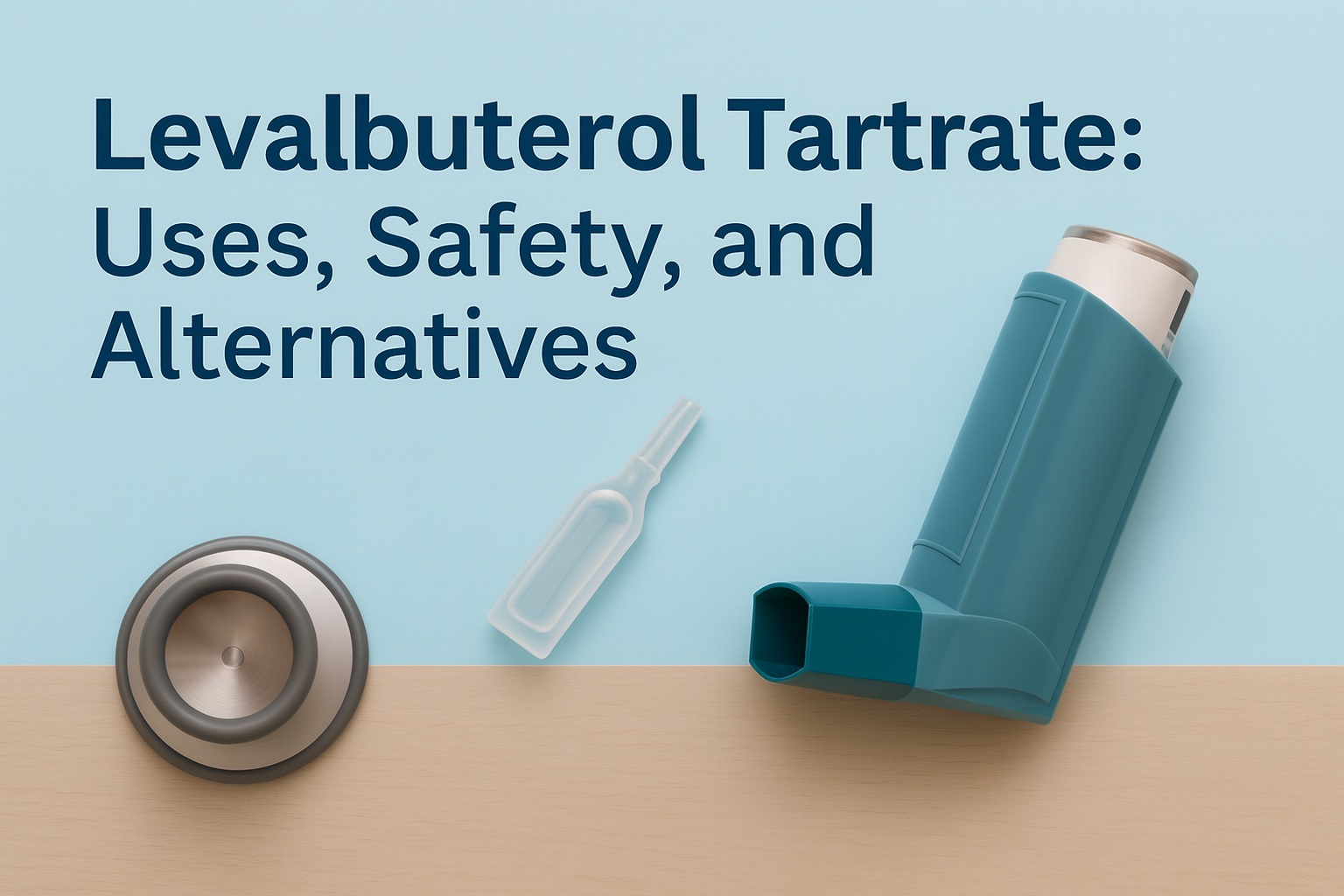
Levalbuterol tartrate is an effective short‑acting bronchodilator for acute bronchospasm and is an alternative to albuterol. For most patients, clinical outcomes are similar between levalbuterol and albuterol; cost, individual tolerance, and device preference usually determine which product is best. Always use rescue inhalers as directed, maintain controller therapy when prescribed, and seek medical care for worsening symptoms.
Overview and mechanism of action
Levalbuterol tartrate is the (R)‑enantiomer of albuterol and acts by selectively stimulating β₂‑adrenergic receptors on airway smooth muscle. Activation of these receptors increases intracellular cyclic AMP, producing rapid bronchodilation that relieves wheeze, chest tightness, and shortness of breath during acute bronchospasm. Levalbuterol is formulated as a metered‑dose inhaler (MDI) and as unit‑dose nebulizer solutions, each intended for oral inhalation only.
Approved indications and who can use it
Levalbuterol Tartrate is used for the treatment or prevention of bronchospasm in patients 4 years of age and older with reversible obstructive airway disease (asthma and some COPD presentations) for the MDI; nebulizer formulations have age‑specific approvals and dosing guidance. Levalbuterol is a rescue medication and is not a substitute for daily controller therapies such as inhaled corticosteroids when those are indicated.
Dosing and administration essentials
- MDI dosing: 2 inhalations every 4–6 hours as needed; in some patients 1 inhalation every 4 hours may be sufficient. Prime the inhaler before first use and after >3 days of nonuse; each canister typically provides 200 actuations.
- Nebulizer dosing: unit‑dose vials are commonly 0.31 mg, 0.63 mg, and 1.25 mg per 3 mL; typical nebulizer schedules vary by age and formulation and must follow the product label or prescriber instructions.
- Important: do not exceed recommended doses; increased need for rescue doses may indicate worsening disease and requires urgent medical reassessment.
Common side effects and safety
Common side effects and safety indications for levalbuterol Tartrate include tremor, nervousness, headache, tachycardia, throat irritation, and dizziness. Important safety warnings include paradoxical bronchospasm (life‑threatening), cardiovascular effects (arrhythmia, chest pain), hypokalemia, and changes in blood glucose; patients with significant cardiac disease or diabetes should discuss risks with their clinician. If severe reactions occur, stop the medication and seek immediate care.
Experiencing Side Effects?
Let’s Rethink Your Meds.
Explore treatment options that may work better for your body – with fewer side effects and lower costs. It’s fast, free, and tailored to you. Learn More →
Evidence summary and comparative effectiveness
Clinical trials and guideline evidence indicate no consistent, clinically meaningful superiority of levalbuterol over racemic albuterol for most patient‑level outcomes (lung function, hospitalization rates) though some studies report smaller physiologic changes or fewer beta‑mediated side effects in select subgroups. Pharmacoeconomic analyses in hospitalized adults have shown similar clinical outcomes but higher treatment costs and, in some studies, longer hospital stays with levalbuterol compared with albuterol. National guideline evidence tables summarize randomized trials and conclude that both agents provide bronchodilation, with differences often small and context dependent.
Alternatives and how they compare
| Medication | Class | Usual role | Practical difference |
| Levalbuterol | SABA R‑isomer | Rescue bronchodilator (MDI, nebulizer) | Single‑isomer; marketed for potentially fewer side effects |
| Albuterol | SABA racemic | Rescue bronchodilator (MDI, nebulizer) | Widely available; lower cost; similar efficacy for most patients |
| Ipratropium bromide | Short‑acting anticholinergic | Adjunct in COPD or severe exacerbations | Different mechanism; often combined with SABA in COPD |
| LABA LAMA | Long‑acting bronchodilators | Maintenance therapy | Not for acute rescue; used for daily control with or without inhaled steroids |
Cost coverage and practical patient considerations
- Cost matters. Generic racemic albuterol is typically less expensive and more widely covered by insurance than branded levalbuterol products; discuss formulary options with your pharmacist or prescriber.
- Device technique is critical. Proper inhaler or nebulizer technique directly affects how much medication reaches the lungs; ask a clinician or pharmacist for a demonstration and periodic technique checks.
- Dose tracking. Keep track of actuations; discard the MDI when the dose indicator reads zero even if spray remains.
- When to seek help. If you need your rescue inhaler more often than usual, experience worsening symptoms, or develop chest pain or fainting, seek urgent medical care.
Stop Overpaying for Meds.
Coupons aren’t your only option – see if safer, more effective, and lower-cost alternatives are available. It’s fast, personalized, and 100% free. Learn More →
Practical patient checklist before using levalbuterol
- Confirm indication and age appropriateness with your prescriber.
- Learn correct inhaler or nebulizer technique and practice under supervision.
- Check insurance coverage and cost; ask about generic albuterol alternatives if cost is a concern.
- Monitor for side effects and report chest pain, severe palpitations, or worsening breathing immediately.
- Keep a written asthma or COPD action plan that explains when to use rescue medication and when to seek care.
Frequently asked questions
- Is levalbuterol safer than albuterol? For most patients, both drugs are similarly effective; levalbuterol may cause fewer beta‑mediated side effects in some studies, but differences are often small and must be weighed against cost and access.
- Can children use levalbuterol? MDI formulations are approved for children 4 years and older; nebulizer solutions have age‑specific approvals (often ≥6 years for some formulations) – follow labeling and prescriber guidance.
- What if my rescue inhaler stops working? Increased need for rescue doses or loss of effect may indicate worsening disease; seek urgent medical evaluation and do not simply increase doses without medical advice.
- Should I switch from albuterol to levalbuterol? Discuss with your clinician; switching may be reasonable if you experience intolerable side effects with albuterol or if insurance covers levalbuterol with acceptable cost.
- How do I store and maintain my inhaler? Prime before first use and after >3 days of nonuse; clean the actuator weekly and store at room temperature away from heat and flames.
Better Treatment, Lower Cost – No Catch.
Find safer, more effective medications with fewer side effects – often for less money. It’s fast, free, and personalized. Learn More →
References (6)
- FDA XOPENEX HFA Prescribing Information PDF – https://www.accessdata.fda.gov/drugsatfda_docs/label/2017/021730s039lbl.pdf
- DailyMed Levalbuterol Inhalation Solution Label – https://dailymed.nlm.nih.gov/dailymed/drugInfo.cfm?setid=5f1c4f22-d420-495c-8f64-33532638215f
- NHLBI Evidence Table Pharmacologic Therapy Bronchodilators Levalbuterol – https://www.nhlbi.nih.gov/health-pro/guidelines/current/asthma-guidelines/evid_tbls/16_levalbuterol.pdf
- MedlinePlus Levalbuterol Oral Inhalation Drug Information – https://medlineplus.gov/druginfo/meds/a603025.html
- Mayo Clinic Levalbuterol Inhalation Route Overview – https://www.mayoclinic.org/drugs-supplements/levalbuterol-inhalation-route/description/drg-20067232
- Brunetti L et al., American Journal of Health‑System Pharmacy Clinical outcomes and treatment cost comparison of levalbuterol versus albuterol – https://academic.oup.com/ajhp/article-abstract/72/12/1026/5111686