




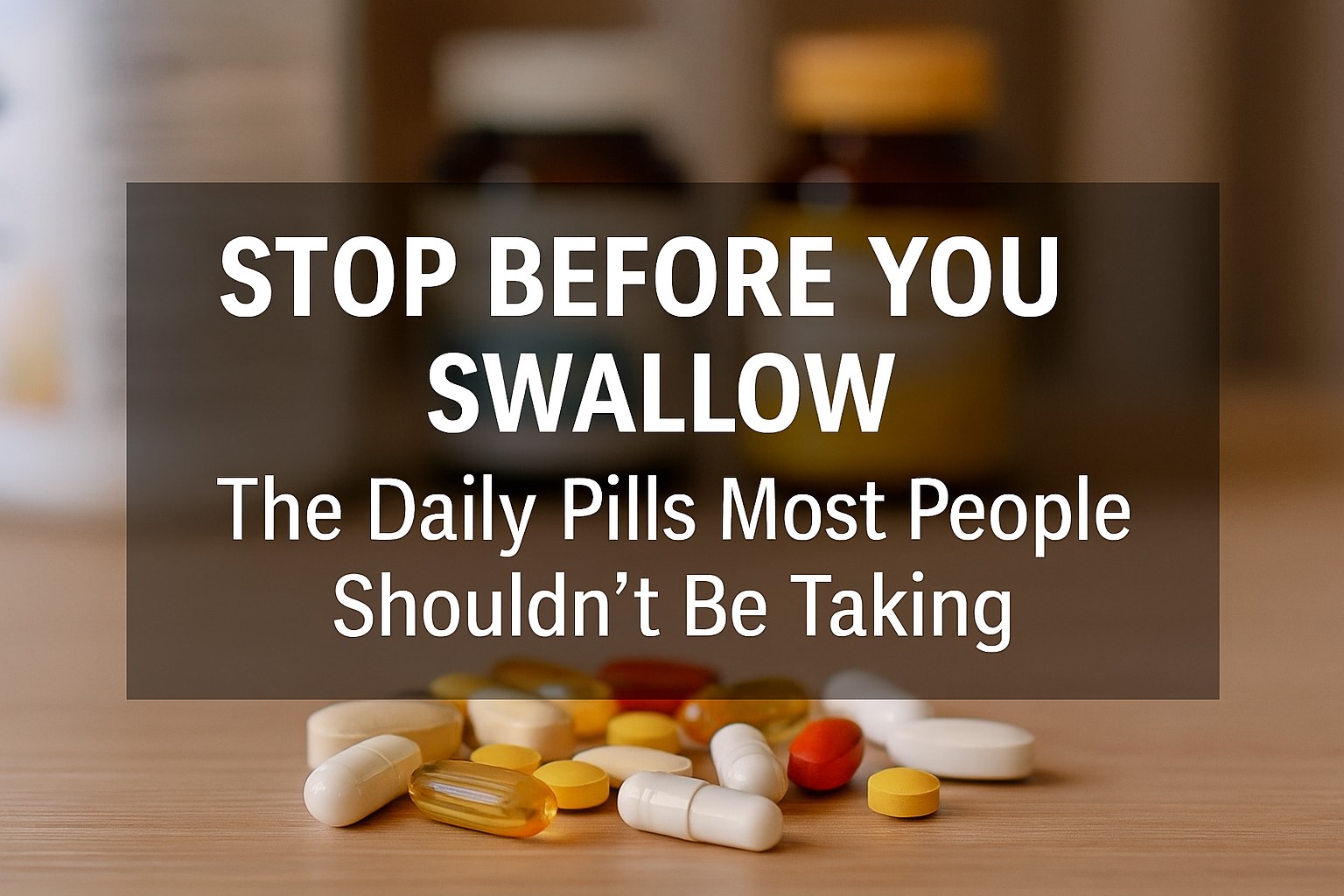
Millions of Americans start their morning with a routine that feels healthy: a multivitamin, a fish oil capsule, maybe an extra vitamin D pill, and an over‑the‑counter pain reliever “just in case.” It feels proactive. It feels safe. But research shows that many of the medications and supplements people take every single day offer little benefit – and in some cases, real harm.
Why “Daily” Doesn’t Always Mean “Safe”
Supplements and over‑the‑counter medications are widely available, heavily marketed, and often assumed to be harmless. But unlike prescription drugs, supplements are not reviewed by the FDA for safety or effectiveness before hitting store shelves. That means quality, purity, and dosage can vary widely.
According to the National Center for Complementary and Integrative Health (NCCIH), many supplements have limited evidence supporting their benefits, and some contain hidden or unsafe ingredients.
Supplements People Take Daily – But Probably Shouldn’t
1. Multivitamins
Multivitamins are the most commonly used supplement in the U.S., but research shows they don’t help people live longer, prevent chronic disease, or improve memory.
Risks:
- Beta carotene may increase lung cancer risk in smokers.
- Vitamin K can interfere with blood thinners like warfarin.
- Iron and copper can build up in the body and increase risks of dementia, diabetes, and heart disease.
Bottom line: If you eat a reasonably varied diet, you likely don’t need a multivitamin.
2. Vitamin D (High Doses)
Vitamin D is essential, but many people take far more than they need – especially in high‑dose daily pills.
Risks of excessive vitamin D:
- Toxic calcium levels (hypercalcemia)
- Nausea, vomiting, muscle weakness
- Kidney stones
- Heart rhythm problems
- Kidney failure in extreme cases
Bottom line: Vitamin D deficiency is real, but mega‑dosing without medical guidance is dangerous.
3. Fish Oil / Omega‑3 Supplements
Fish oil is often marketed as “heart healthy,” but high doses can cause problems.
Risks:
- Reduced immune function
- Excessive bleeding due to reduced platelet activity
Experts recommend no more than 5 grams per day unless supervised by a clinician.
Bottom line: Omega‑3s from food (like salmon) are safer and more effective than pills.
4. Vitamin C (High Doses)
Vitamin C is water‑soluble, but that doesn’t mean unlimited amounts are harmless.
Risks:
- Increased risk of kidney stones, especially in men
- Interactions with chemotherapy, radiation, and statins
Bottom line: You can get plenty of vitamin C from fruits and vegetables.
5. Calcium Supplements
Calcium is important for bone health, but too much from supplements – not food – can be harmful.
Risks:
- Hardening of the arteries
- Kidney stones
- Higher risk of cardiovascular disease
Bottom line: Most adults can meet their calcium needs through diet.
6. Magnesium Supplements
Magnesium is essential, but high supplemental doses can cause digestive issues and, in extreme cases, toxicity.
Risks:
- Diarrhea, cramping, gas
- Low blood pressure
- Irregular heartbeat
- Difficulty breathing
Bottom line: Unless you have a diagnosed deficiency, daily magnesium pills are unnecessary.
7. Probiotics
Probiotics are often marketed as “good bacteria,” but they’re not risk‑free.
Risks:
- Gas, bloating, stomach upset
- Infections in people with weakened immune systems
Bottom line: Fermented foods like yogurt and kefir have stronger evidence for gut health than probiotic pills.
Experiencing Side Effects?
Let’s Rethink Your Meds.
Explore treatment options that may work better for your body – with fewer side effects and lower costs. It’s fast, free, and tailored to you. Learn More →
Medications People Take Daily – But Shouldn’t
1. NSAIDs (Ibuprofen, Naproxen)
Many people take ibuprofen daily for headaches, joint pain, or general discomfort. But daily use is unsafe.
Risks:
- Stomach ulcers and bleeding
- Kidney damage
- Heart attack and stroke
- High blood pressure
NSAIDs contribute to over 100,000 hospitalizations and 16,000 deaths per year in the U.S.
Bottom line: NSAIDs should be used sparingly – not as a daily habit.
2. Proton Pump Inhibitors (PPIs)
PPIs (like omeprazole) are widely used for heartburn and acid reflux. Many people take them daily for years without medical supervision.
What the research shows:
Large, high‑quality studies from Nordic countries found no link between long‑term PPI use and stomach cancer.
However, other research has raised concerns about:
- Fractures
- Kidney disease
- Vitamin deficiencies
Bottom line: PPIs are safe when medically necessary, but long‑term use without a clear reason is not recommended.
Better Treatment, Lower Cost – No Catch.
Find safer, more effective medications with fewer side effects – often for less money. It’s fast, free, and personalized. Learn More →
Daily Pills You Should Rethink
| Category | Common Daily Use | Why People Take It | Key Risks |
| Multivitamins | General health | “Cover all bases” | Lung cancer risk (beta carotene), drug interactions, mineral overload |
| Vitamin D | Bone health | “Low levels” | Toxic calcium levels, kidney issues |
| Fish Oil | Heart health | “Omega‑3 benefits” | Bleeding, immune suppression |
| Vitamin C | Immunity | “Extra protection” | Kidney stones, drug interactions |
| Calcium | Bone strength | “Prevent osteoporosis” | Artery calcification, kidney stones |
| Magnesium | Muscle/nerve support | “Relaxation” | GI upset, toxicity |
| Probiotics | Gut health | “Good bacteria” | GI symptoms, infection risk |
| NSAIDs | Pain relief | “Daily aches” | Ulcers, kidney damage, heart risks |
| PPIs | Heartburn | “Chronic reflux” | Mixed evidence; long‑term use should be supervised |
Why People Take These Pills Daily – And Why That’s a Problem
Many people take supplements “just in case,” or because they’ve heard they’re “good for you.” But experts from Stanford Medicine emphasize that most people do not need supplements unless they have a proven deficiency or a specific medical condition.
They also warn that “natural” does not mean “safe,” and supplements can interact with medications or contain contaminants.
What You Should Do Instead
1. Get nutrients from food
Whole foods contain vitamins, minerals, fiber, and thousands of beneficial compounds that supplements can’t replicate.
2. Only supplement when medically necessary
Blood tests and professional guidance – not guesswork – should determine whether you need a supplement.
3. Treat medications like medications
Even over‑the‑counter drugs carry risks. Daily use should always be discussed with a healthcare provider.
4. Be skeptical of marketing
The supplement industry is a $60‑billion‑a‑year business. Their goal is to sell products – not necessarily to improve your health.
What next?
Daily pills can feel like a shortcut to better health, but the science tells a different story. Many supplements offer little benefit, and some carry real risks when taken every day. Over‑the‑counter medications, especially NSAIDs, can be dangerous when used routinely.
The safest approach is simple: rely on food for nutrients, use medications only when needed, and talk to a healthcare professional before making anything a daily habit.
Stop Overpaying for Meds.
Coupons aren’t your only option – see if safer, more effective, and lower-cost alternatives are available. It’s fast, personalized, and 100% free. Learn More →
Sources (7)
- NCCIH – Using Dietary Supplements Wisely – https://www.nccih.nih.gov/health/using-dietary-supplements-wisely
- Verywell Health – Dangerous Side Effects and Risks of 8 Popular Supplements – https://www.verywellhealth.com/side-effects-of-popular-supplements-11757875
- Cleveland Clinic – Side Effects of Ibuprofen – https://health.clevelandclinic.org/is-it-bad-to-take-ibuprofen-every-day
- BMJ – Long‑Term PPI Use Not Linked to Gastric Cancer – https://www.bmj.com/content/392/bmj-2025-086384
- NIH – Long‑Term PPI Use and Stomach Cancer Risk – https://pubmed.ncbi.nlm.nih.gov/41565320
- Yale Medicine – Are PPIs Safe for Long‑Term Use? – https://www.yalemedicine.org/news/are-ppis-safe-for-long-term-use
- Stanford Medicine – Five Myths About Supplements – https://med.stanford.edu/news/insights/2025/12/supplements-five-myths-worth-busting.html