




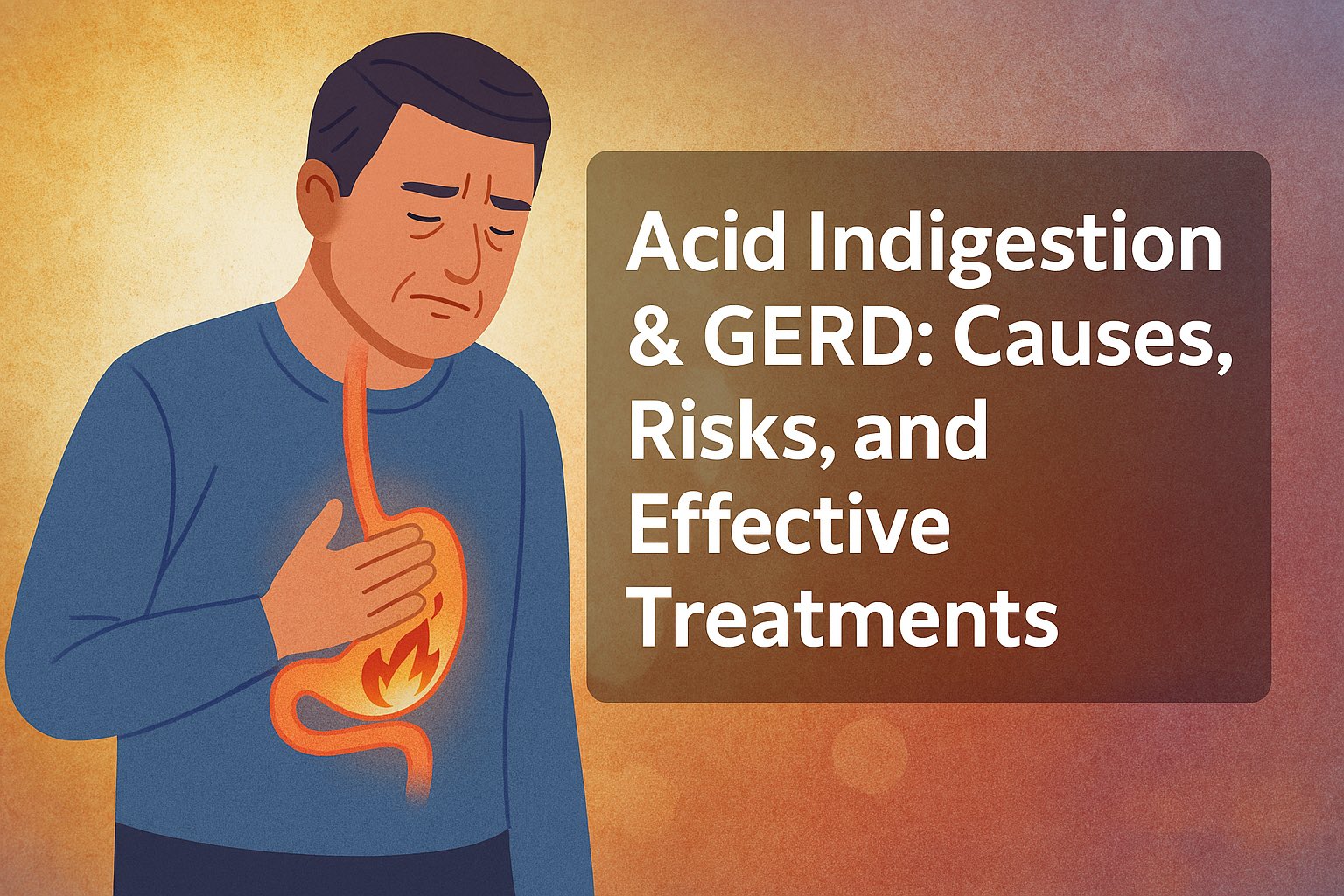
Acid indigestion and gastroesophageal reflux disease (GERD) are among the most prevalent gastrointestinal disorders globally, affecting millions of individuals and imposing significant clinical, economic, and quality-of-life burdens. Acid indigestion, often referred to as heartburn or dyspepsia, is characterized by a burning sensation in the chest or upper abdomen, frequently after meals. GERD, a chronic and more severe manifestation, involves the recurrent retrograde flow of gastric contents into the esophagus, leading to troublesome symptoms and, in some cases, serious complications such as erosive esophagitis, Barrett’s esophagus, and esophageal adenocarcinoma.
This article provides an in-depth, evidence-based analysis of acid indigestion and GERD, encompassing definitions, epidemiology, pathophysiology, risk factors, complications, diagnostic approaches, and a detailed comparison of medication-based and lifestyle-based treatments. Special attention is given to clinical guidelines, patient education resources, and considerations for special populations.
Definitions and Epidemiology
Acid Indigestion
Acid indigestion, commonly known as heartburn, refers to a burning discomfort in the chest or upper abdomen, often associated with regurgitation of gastric contents into the esophagus. While occasional episodes are common and typically benign, frequent or severe symptoms may indicate underlying GERD or other gastrointestinal pathology.
Gastroesophageal Reflux Disease (GERD)
GERD is defined as a chronic condition in which the reflux of stomach contents into the esophagus causes troublesome symptoms and/or complications. The Montreal consensus and major clinical guidelines specify that GERD is diagnosed when reflux leads to symptoms such as heartburn, regurgitation, chest pain, or extraesophageal manifestations, or when endoscopic or pH monitoring demonstrates abnormal acid exposure or mucosal injury.
Prevalence
- Global Prevalence: Recent estimates indicate that GERD affects approximately 13 – 20% of adults in Western countries, with prevalence rates exceeding 25% in some regions such as South Asia and Southeast Europe. In the United States, about 20% of the population reports weekly symptoms, and 7% experience daily symptoms.
- Trends: The global burden of GERD has increased substantially over the past three decades, with incident and prevalent cases rising by over 80% from 1990 to 2021. This trend is attributed to lifestyle changes, increasing obesity rates, aging populations, and dietary shifts.
- Demographics: GERD is more common in older adults, women, and individuals with obesity. The highest absolute case numbers are observed in the 35 – 39 age group, while age-specific rates peak in the 70 – 74 age group.
Clinical Presentation
- Typical Symptoms: Heartburn (substernal burning), regurgitation (effortless return of gastric contents), and chest pain are the hallmark symptoms of GERD. These symptoms may be exacerbated by meals, lying down, or bending over.
- Atypical/Extraesophageal Symptoms: Chronic cough, laryngitis, asthma, dental erosions, and a sensation of a lump in the throat (globus) may also be present, particularly in severe or long-standing disease.
- Nocturnal Symptoms: Up to 25% of GERD patients experience sleep disturbances due to nocturnal reflux, which is associated with more severe disease and increased risk of complications.
Pathophysiology and Mechanisms of Reflux
Lower Esophageal Sphincter (LES) Dysfunction
The LES is a specialized ring of muscle at the junction of the esophagus and stomach, acting as a barrier to prevent gastric contents from refluxing into the esophagus. GERD primarily results from dysfunction of the LES, which may be due to:
- Transient LES Relaxations (TLESRs): These are spontaneous, non-swallow-related relaxations that allow gastric contents to reflux. TLESRs are more frequent and prolonged in GERD patients.
- Reduced LES Pressure: Lower resting pressure facilitates reflux, especially in the presence of increased intra-abdominal pressure.
- Anatomical Abnormalities: Hiatal hernia, in which the stomach herniates through the diaphragm, disrupts the anti-reflux barrier and is a significant risk factor for GERD.
Esophageal Clearance and Mucosal Defense
Impaired esophageal peristalsis, reduced salivary production, and delayed gastric emptying contribute to prolonged acid exposure and mucosal injury. Chronic acid exposure leads to inflammation (esophagitis), ulceration, and, in some cases, metaplastic changes (Barrett’s esophagus).
Gastric Factors
- Gastric Acid Secretion: Hypersecretion of gastric acid, often influenced by dietary and hormonal factors, exacerbates reflux symptoms and mucosal injury.
- Gastric Emptying: Delayed emptying increases the volume and pressure in the stomach, promoting reflux.
Underlying Causes and Risk Factors
Dietary Factors
- Trigger Foods: High-fat and fried foods, chocolate, caffeine, alcohol, peppermint, onions, garlic, citrus fruits, tomatoes, spicy foods, and carbonated beverages are commonly implicated in triggering reflux symptoms by reducing LES pressure or increasing gastric acid secretion.
- Meal Patterns: Large meals, late-night eating, and rapid eating increase gastric distension and the likelihood of TLESRs, thereby promoting reflux.
Anatomical and Medical Factors
- Hiatal Hernia: Present in up to 70 – 90% of patients with severe GERD or Barrett’s esophagus, hiatal hernia disrupts the anti-reflux barrier and prolongs acid clearance.
- Obesity: Central (abdominal) obesity increases intra-abdominal pressure, augments the gastroesophageal pressure gradient, and is strongly associated with GERD and its complications, including Barrett’s esophagus and esophageal adenocarcinoma.
- Pregnancy: Hormonal changes and increased intra-abdominal pressure during pregnancy contribute to GERD symptoms, affecting up to 80% of pregnant women.
- Connective Tissue Disorders: Conditions such as scleroderma impair LES function and esophageal motility, increasing GERD risk.
- Diabetes Mellitus: Associated with gastroparesis and impaired esophageal motility, increasing the risk of reflux.
Behavioral and Medication-Related Factors
- Smoking: Reduces LES pressure and impairs mucosal defense, increasing acid exposure and risk of complications.
- Alcohol Consumption: Relaxes the LES and increases gastric acid secretion.
- Medications: Calcium channel blockers, nitrates, theophylline, anticholinergics, tricyclic antidepressants, NSAIDs, bisphosphonates, and certain antibiotics can exacerbate GERD by reducing LES pressure or irritating the esophageal mucosa.
Short- and Long-Term Health Risks of Untreated Reflux
Esophageal Complications
- Erosive Esophagitis: Chronic acid exposure leads to inflammation, ulceration, and necrosis of the esophageal mucosa, causing pain, bleeding, and dysphagia.
- Esophageal Stricture: Healing of ulcerative esophagitis with fibrosis can cause narrowing of the esophagus, resulting in progressive dysphagia and risk of food impaction.
- Barrett’s Esophagus: Chronic injury induces metaplastic transformation of the esophageal lining, increasing the risk of esophageal adenocarcinoma. Barrett’s esophagus is present in 7 – 10% of chronic GERD patients and is a precursor to cancer.
- Esophageal Adenocarcinoma: GERD with erosive esophagitis is associated with a two- to threefold increased risk of esophageal adenocarcinoma. The prognosis is poor, with a 5-year survival rate of 20% or less for advanced disease.
Extraesophageal Complications
- Respiratory: Chronic cough, laryngitis, asthma exacerbations, and, rarely, aspiration pneumonia may result from microaspiration of gastric contents.
- Dental Erosion: Acid reflux can erode dental enamel, leading to sensitivity, discoloration, and increased risk of cavities.
- Sleep Disturbance: Nocturnal reflux disrupts sleep, leading to fatigue, impaired concentration, and reduced quality of life.
Other Risks
- Iron Deficiency Anemia: Chronic blood loss from erosive esophagitis or Cameron lesions in hiatal hernia can cause anemia.
- Malnutrition and Weight Loss: Severe dysphagia or odynophagia may lead to inadequate oral intake and weight loss.
Diagnostic Evaluation and When to Seek Medical Attention
Clinical Assessment
- Symptom-Based Diagnosis: In patients with classic symptoms (heartburn and regurgitation) and no alarm features, an empiric trial of proton pump inhibitors (PPIs) is recommended as an initial diagnostic and therapeutic approach.
- Alarm Symptoms: Dysphagia, odynophagia, gastrointestinal bleeding, unexplained weight loss, persistent vomiting, or anemia warrant prompt endoscopic evaluation to exclude malignancy or severe complications.
Diagnostic Testing
- Upper Endoscopy (EGD): Indicated for patients with alarm symptoms, refractory symptoms, or multiple risk factors for Barrett’s esophagus. Endoscopy can identify erosive esophagitis, Barrett’s esophagus, strictures, and malignancy.
- Ambulatory pH Monitoring: Gold standard for diagnosing abnormal acid exposure, especially in patients with atypical symptoms or prior to anti-reflux surgery.
- Esophageal Manometry: Assesses esophageal motility disorders and is used preoperatively to guide surgical planning.
- Barium Swallow: Not recommended as a sole diagnostic test for GERD but may be useful in evaluating structural abnormalities.
When to See a Doctor
Patients should seek medical attention if they experience:
- Severe or frequent GERD symptoms
- Symptoms unresponsive to over-the-counter medications after two weeks
- Alarm symptoms (dysphagia, bleeding, weight loss, persistent vomiting)
- New or worsening chest pain, especially with shortness of breath or radiating pain (to rule out cardiac causes).
Better Treatment, Lower Cost – No Catch.
Find safer, more effective medications with fewer side effects – often for less money. It’s fast, free, and personalized. Learn More →
Medication-Based Treatments
Overview
Pharmacologic therapy is the mainstay for managing GERD and acid indigestion, particularly in moderate-to-severe or persistent cases. The principal classes of medications include antacids, histamine-2 receptor antagonists (H2RAs), proton pump inhibitors (PPIs), potassium-competitive acid blockers (PCABs), and prokinetic agents. Each class has distinct mechanisms, efficacy profiles, side effects, and recommended uses.
Antacids
Mechanism of Action
Antacids are alkaline compounds that neutralize gastric acid in the stomach lumen, providing rapid but short-lived relief of heartburn and indigestion. Common agents include calcium carbonate, magnesium hydroxide, aluminum hydroxide, and sodium bicarbonate. Some formulations contain alginate, which forms a protective barrier to reduce reflux episodes.
Efficacy and Indications
- Onset: Immediate (within minutes)
- Duration: Short (1 – 3 hours)
- Indications: Occasional, mild heartburn or acid indigestion; not recommended for chronic or severe GERD.
Side Effects
- Magnesium-containing antacids: Diarrhea
- Aluminum-containing antacids: Constipation, hypophosphatemia
- Calcium carbonate: Constipation, hypercalcemia, acid rebound
- Sodium bicarbonate: Belching, metabolic alkalosis, fluid overload (caution in heart failure, hypertension)
- Drug interactions: May impair absorption of other medications (e.g., tetracyclines, fluoroquinolones, iron, digoxin); separate dosing by at least 2 hours.
Guidelines for Use
- Use as needed for rapid symptom relief
- Not recommended for long-term or frequent use (>2 weeks) without medical evaluation
- Safe in pregnancy (calcium or magnesium-based preferred).
Histamine-2 Receptor Antagonists (H2RAs)
Mechanism of Action
H2RAs (e.g., famotidine, cimetidine, nizatidine) competitively inhibit histamine H2 receptors on gastric parietal cells, reducing both basal and meal-stimulated acid secretion. They are less potent than PPIs but provide longer-lasting relief than antacids.
Efficacy and Indications
- Onset: 30 – 90 minutes
- Duration: 6 – 12 hours
- Indications: Mild-to-moderate GERD, nocturnal symptoms, maintenance therapy in mild cases, or as adjunct to PPIs for nighttime symptoms
- Efficacy: Heal ~40% of erosive esophagitis in 4 – 12 weeks; less effective than PPIs for mucosal healing.
Side Effects
- Headache, dizziness, diarrhea, constipation
- Rare: Confusion (elderly), gynecomastia (cimetidine), hepatic dysfunction, drug interactions (cimetidine inhibits CYP450)
- Tolerance (tachyphylaxis) develops with continuous use.
Guidelines for Use
- May be used as needed or at bedtime for nocturnal symptoms
- Not recommended as sole therapy for severe GERD or erosive esophagitis
- Safe in pregnancy (famotidine preferred).
Proton Pump Inhibitors (PPIs)
Mechanism of Action
PPIs (e.g., omeprazole, esomeprazole, pantoprazole, lansoprazole, rabeprazole, dexlansoprazole) irreversibly inhibit the H+/K+-ATPase (proton pump) in gastric parietal cells, blocking the final step of acid secretion. They provide the most potent and sustained acid suppression.
Efficacy and Indications
- Onset: 1 – 4 days for maximal effect
- Duration: 24 – 48 hours per dose
- Indications: Moderate-to-severe GERD, erosive esophagitis, Barrett’s esophagus, peptic ulcer disease, Zollinger-Ellison syndrome
- Efficacy: Heal 80 – 90% of erosive esophagitis within 8 weeks; superior to H2RAs for symptom relief and mucosal healing.
Side Effects
- Common: Headache, abdominal pain, nausea, diarrhea, constipation, flatulence
- Long-term: Increased risk of enteric infections (e.g., C. difficile), pneumonia, nutrient deficiencies (magnesium, calcium, vitamin B12), bone fractures, chronic kidney disease (CKD), possible dementia (observational data), rebound acid hypersecretion on withdrawal
- Drug interactions: Clopidogrel (omeprazole, esomeprazole), warfarin, methotrexate, digoxin, antifungals.
Guidelines for Use
- Administer 30 – 60 minutes before the first meal of the day
- Standard course: 4 – 8 weeks for uncomplicated GERD; longer for erosive esophagitis or Barrett’s esophagus
- Use the lowest effective dose for maintenance; attempt step-down or on-demand therapy when possible
- Periodically reassess the need for continued therapy; deprescribe in patients without a clear indication.
Special Considerations
- Safe in pregnancy (omeprazole and esomeprazole have the most data).
- Elderly: Monitor for adverse effects and drug interactions
- Pediatric: Weight-based dosing; monitor for infection risk
Potassium-Competitive Acid Blockers (PCABs)
Mechanism of Action
PCABs (e.g., vonoprazan, tegoprazan, keverprazan, fexuprazan) reversibly inhibit the H+/K+-ATPase by competitively binding to the potassium site, providing rapid and potent acid suppression. Unlike PPIs, they do not require activation in an acidic environment and are less affected by CYP2C19 polymorphisms.
Efficacy and Indications
- Onset: Rapid (within hours)
- Duration: Prolonged, with superior nocturnal acid control
- Indications: Approved for erosive esophagitis and non-erosive reflux disease (NERD); effective in PPI-refractory GERD
- Efficacy: Meta-analyses show higher healing rates than PPIs, especially in severe erosive esophagitis (LA grade C/D); rapid symptom relief and sustained mucosal healing.
Side Effects
- Comparable to PPIs: Nasopharyngitis, diarrhea, nausea, constipation, headache
- Long-term: Increased gastrin levels, parietal cell hyperplasia; rare reports of gastric neoplasia (causal link unproven)
- Drug interactions: Fewer than PPIs; not affected by CYP2C19 polymorphisms.
Guidelines for Use
- Can be taken with or without food
- Standard dosing: Vonoprazan 10 – 20 mg daily for 4 – 8 weeks
- Suitable for patients with PPI resistance or requiring rapid symptom control
- Long-term safety data are reassuring but ongoing monitoring is recommended.
Prokinetic Agents
Mechanism of Action
Prokinetic agents (e.g., metoclopramide, domperidone, itopride, erythromycin) enhance gastrointestinal motility, increase LES tone, and accelerate gastric emptying. They are used as adjuncts in selected patients with documented motility disorders or refractory symptoms.
Efficacy and Indications
- Indications: Adjunct in PPI-refractory GERD with documented gastroparesis or esophageal hypomotility
- Efficacy: Modest symptom improvement; not recommended as monotherapy for GERD.
Side Effects
- Metoclopramide: Extrapyramidal symptoms (tardive dyskinesia, dystonia), drowsiness, fatigue, diarrhea; black box warning for tardive dyskinesia with prolonged use (>12 weeks)
- Domperidone: Cardiac arrhythmias (QT prolongation), less CNS toxicity
- Erythromycin: GI upset, tachyphylaxis, cardiac risks
- Itopride: Well tolerated; rare mild GI or CNS effects.
Guidelines for Use
- Reserve for patients with documented motility disorders or refractory symptoms
- Use the lowest effective dose for the shortest duration
- Monitor for adverse effects, especially in elderly and those with comorbidities.
Comparative Table: Medication Types, Efficacy, and Side Effects
| Medication Type | Mechanism of Action | Onset | Duration | Efficacy | Common Side Effects | Guidelines for Use |
| Antacids | Neutralize gastric acid | Minutes | 1 – 3 h | Symptom relief only | Constipation, diarrhea, belching | On-demand, not for chronic use |
| H2RAs | Block H2 receptors on parietal cells | 30 – 90 min | 6 – 12 h | Mild-to-moderate GERD, nocturnal symptoms | Headache, diarrhea, tolerance | As needed or bedtime |
| PPIs | Irreversibly inhibit H+/K+-ATPase | 1 – 4 days | 24 – 48 h | Moderate-to-severe GERD, erosive esophagitis | Headache, GI upset, long-term risks | 30 – 60 min before meal, lowest effective dose |
| PCABs | Reversibly inhibit H+/K+-ATPase (K+ site) | Hours | Prolonged | Rapid, potent acid suppression, PPI-refractory GERD | Similar to PPIs, ↑ gastrin | With or without food, rapid effect |
| Prokinetics | Enhance GI motility, ↑ LES tone | Variable | Variable | Adjunct in motility disorders | CNS, cardiac, GI side effects | Short-term, selected patients |
Stop Overpaying for Meds.
Coupons aren’t your only option – see if safer, more effective, and lower-cost alternatives are available. It’s fast, personalized, and 100% free. Learn More →
Lifestyle-Based Treatments
Lifestyle modifications are universally recommended as first-line therapy for mild GERD and as adjuncts to pharmacologic therapy in moderate-to-severe disease. They target modifiable risk factors and can significantly reduce symptom burden and the need for medication.
Dietary Modifications
Trigger Foods and Beverages
- Foods to Avoid: Fatty and fried foods, chocolate, caffeine, alcohol, peppermint, onions, garlic, citrus fruits, tomatoes, spicy foods, carbonated beverages
- Mechanisms: These foods reduce LES pressure, delay gastric emptying, or increase gastric acid secretion, thereby promoting reflux.
- Evidence: Systematic reviews and meta-analyses support the role of low-carbohydrate diets in reducing esophageal acid exposure and symptom scores. High-fat diets and fast eating are associated with increased risk in observational studies, but intervention studies show mixed results.
- Personalization: Not all patients react to the same triggers; individualized dietary counseling and food diaries are recommended.
Meal Patterns and Timing
- Eat Smaller, More Frequent Meals: Large meals increase gastric distension and TLESRs
- Avoid Eating 2 – 3 Hours Before Bedtime: Reduces nocturnal reflux and acid exposure.
- Eat Slowly: Rapid eating may increase reflux risk; mindful eating is encouraged.
Specific Diets
- Mediterranean Diet: Emphasizes plant-based foods, whole grains, lean proteins, and healthy fats; associated with reduced GERD symptoms and improved quality of life in observational studies.
- Low-Carbohydrate Diets: Shown to reduce acid exposure and symptom scores in RCTs and meta-analyses.
- High-Fiber Diets: May increase LES tone and reduce reflux episodes.
Weight Management
- Obesity: Strongly associated with GERD; central obesity increases intra-abdominal pressure and reflux risk.
- Weight Loss: Even modest reductions in BMI (≥2 kg/m²) or waist circumference (≥5 cm) significantly improve symptoms and reduce acid exposure. Weight loss is strongly recommended for overweight and obese patients.
Sleep Positioning and Bed Elevation
- Elevate Head of Bed: Raising the head of the bed by 6 – 8 inches reduces nocturnal reflux and esophageal acid exposure; supported by RCTs.
- Sleep on Left Side: Left lateral decubitus position reduces reflux episodes compared to right side or supine position.
Behavioral Strategies
- Avoid Smoking: Smoking cessation improves LES tone and reduces symptoms; supported by cohort studies and meta-analyses.
- Limit Alcohol: Alcohol relaxes the LES and increases acid secretion; moderation or avoidance is recommended, though evidence is mixed.
- Wear Loose-Fitting Clothing: Reduces abdominal pressure and reflux risk.
- Avoid Vigorous Exercise After Meals: Wait at least 2 hours after eating before exercising.
Stress Management
- Stress and Anxiety: Psychological stress can exacerbate GERD symptoms via gut – brain axis mechanisms; cognitive-behavioral therapy and mindfulness may help in selected patients.
Summary Table: Lifestyle Modifications and Evidence
| Lifestyle Modification | Evidence Strength | Effectiveness | Recommendation |
| Weight loss | High | Significant | Strongly recommended |
| Avoid late meals | Moderate | Significant | Recommended |
| Elevate head of bed | High | Significant (nocturnal symptoms) | Recommended |
| Sleep on left side | High | Significant | Recommended |
| Avoid trigger foods | Moderate | Variable | Individualized |
| Eat smaller meals | Moderate | Beneficial | Recommended |
| Smoking cessation | Moderate | Beneficial | Recommended |
| Limit alcohol | Low – Moderate | Variable | Recommended |
| Avoid tight clothing | Low | Beneficial | Recommended |
| Stress management | Low – Moderate | Beneficial | Consider in selected patients |
Comparative Effectiveness: Medication vs. Lifestyle Interventions
Medication-Based Interventions
- PPIs: Most effective for healing erosive esophagitis and providing symptom relief in moderate-to-severe GERD; superior to H2RAs and antacids.
- PCABs: Emerging evidence shows superior or non-inferior efficacy to PPIs, especially in severe or refractory cases.
- H2RAs: Effective for mild-to-moderate symptoms and nocturnal acid suppression; less effective for mucosal healing.
- Antacids: Provide rapid, short-term relief; not suitable for chronic management.
Experiencing Side Effects?
Let’s Rethink Your Meds.
Explore treatment options that may work better for your body – with fewer side effects and lower costs. It’s fast, free, and tailored to you. Learn More →
Lifestyle-Based Interventions
- Weight Loss, Bed Elevation, Meal Timing: Demonstrated efficacy in reducing symptoms and acid exposure, particularly for nocturnal GERD.
- Dietary Modifications: Low-carbohydrate and Mediterranean diets show benefit; avoidance of specific triggers should be individualized.
- Behavioral Changes: Smoking cessation and stress management improve outcomes.
Combination Therapy
- Best Practice: Most patients benefit from a combination of lifestyle modifications and pharmacologic therapy. Lifestyle changes can reduce medication requirements and improve long-term outcomes.
Surgical and Endoscopic Interventions
Indications
Surgical or endoscopic interventions are considered for patients with:
- Refractory GERD despite optimized medical and lifestyle therapy
- Severe complications (e.g., strictures, Barrett’s esophagus)
- Preference to avoid long-term medication
- Anatomical abnormalities (e.g., large hiatal hernia).
Surgical Options
- Nissen Fundoplication: Gold standard; involves a 360° wrap of the gastric fundus around the esophagus to reinforce the LES. Provides durable symptom control and mucosal healing but carries risks of dysphagia and gas-bloat syndrome.
- Partial Fundoplication (Toupet, Dor): Lower risk of dysphagia; suitable for patients with esophageal motility disorders.
- Magnetic Sphincter Augmentation (LINX): Implantable device that augments LES function; preserves physiological swallowing but may cause dysphagia or device-related complications.
- Bariatric Surgery (Roux-en-Y Gastric Bypass): Recommended for obese patients with refractory GERD; provides weight loss and symptom resolution.
Endoscopic Options
- Endoscopic Fundoplication: Minimally invasive; suitable for selected patients with mild-to-moderate GERD.
- Radiofrequency Treatment: Delivers energy to the LES to improve tone; limited long-term data.
Outcomes
Surgical and endoscopic interventions provide durable symptom relief and reduce medication dependence in appropriately selected patients. Risks include dysphagia, gas-bloat, and need for reoperation in a minority of cases.
Special Populations
Pregnancy
- Prevalence: Up to 80% of pregnant women experience heartburn or reflux due to hormonal and mechanical factors.
- First-Line Therapy: Lifestyle modifications (bed elevation, small frequent meals, avoidance of triggers)
- Medications: Calcium or magnesium-based antacids are preferred; H2RAs (famotidine) are considered safe; PPIs (omeprazole, esomeprazole) are used for refractory cases and are not associated with increased risk of birth defects.
Pediatrics
- Infants: Physiological reflux is common; most cases resolve spontaneously. Pharmacologic therapy is reserved for severe or complicated cases.
- Children/Adolescents: Lifestyle modifications and weight management are emphasized; PPIs are used for persistent or severe symptoms.
Elderly
- Risks: Increased susceptibility to medication side effects (e.g., fractures, infections, renal impairment)
- Management: Use lowest effective dose of PPIs; monitor for adverse effects and drug interactions.
Monitoring, Follow-Up, Deprescribing, and Safety Considerations
- Regular Review: All patients on long-term acid-suppressive therapy should have periodic assessment of ongoing indications and adverse effects.
- Deprescribing: Attempt step-down or discontinuation in patients without complications (e.g., severe esophagitis, Barrett’s esophagus, strictures). Tapering may reduce rebound acid hypersecretion.
- Monitoring: Routine monitoring of bone mineral density, vitamin B12, magnesium, and renal function is not required unless risk factors are present.
- Patient Education: Inform patients about potential side effects, importance of adherence, and need for follow-up.
Clinical Guidelines, Patient Education Resources, and Evidence-Based Recommendations
Key Guidelines
- American College of Gastroenterology (ACG): Comprehensive recommendations for diagnosis, management, and follow-up of GERD, including stepwise therapy, lifestyle modifications, and indications for surgery.
- American Gastroenterological Association (AGA): Guidance on diagnosis, pharmacologic management, and deprescribing of PPIs.
- American Society for Gastrointestinal Endoscopy (ASGE): Guidelines for screening and surveillance of Barrett’s esophagus and endoscopic management.
Patient Education Resources
- ACG GERD Patient Information: https://gi.org/topics/gerd/
- ASGE GERD Diet Infographic: https://www.asge.org/docs/default-source/about-asge/newsroom/doc-gerd_infographic_final.pdf
- AGA Clinical Guidance: https://gastro.org/clinical-guidance/
- MotherSafe (Pregnancy and Breastfeeding): https://www.seslhd.health.nsw.gov.au/sites/default/files/groups/Royal_Hospital_for_Women/Mothersafe/documents/heartburnpregbr2021.pdf
Evidence Synthesis: Systematic Reviews and Meta-Analyses
- PPIs vs. H2RAs: Meta-analyses confirm superior efficacy of PPIs for healing erosive esophagitis and symptom relief; H2RAs are effective for mild cases and nocturnal symptoms.
- PCABs vs. PPIs: Recent network meta-analyses show PCABs (e.g., vonoprazan, keverprazan) have higher healing rates, especially in severe esophagitis, with similar safety profiles.
- Lifestyle Interventions: Weight loss, bed elevation, and meal timing are supported by RCTs and cohort studies; dietary interventions show benefit, particularly low-carbohydrate and Mediterranean diets.
- Deprescribing PPIs: Clinical practice updates recommend regular review of indications and step-down strategies to minimize unnecessary long-term use.
Final Thoughts
Acid indigestion and GERD are highly prevalent conditions with significant clinical and societal impact. The pathogenesis involves a complex interplay of anatomical, physiological, dietary, behavioral, and medical factors. Untreated GERD can lead to serious complications, including erosive esophagitis, strictures, Barrett’s esophagus, and esophageal adenocarcinoma.
Medication-based therapies, particularly PPIs and PCABs, are highly effective for symptom relief and mucosal healing, but should be used judiciously and at the lowest effective dose. Lifestyle modifications—including weight loss, dietary adjustments, meal timing, bed elevation, and behavioral changes—are essential components of management and can reduce reliance on medications.
A personalized, evidence-based approach that integrates both pharmacologic and non-pharmacologic strategies, guided by clinical guidelines and regular follow-up, offers the best outcomes for patients with acid indigestion and GERD. Special considerations are warranted for pregnant women, children, and the elderly. Ongoing research and emerging therapies, such as PCABs and minimally invasive interventions, continue to advance the field and improve patient care.
Better Treatment, Lower Cost – No Catch.
Find safer, more effective medications with fewer side effects – often for less money. It’s fast, free, and personalized. Learn More →
References (42)
- link.springer.com
Global, regional and national burdens of gastroesophageal reflux … - ales.amegroups.org
Atypical and typical manifestations of the hiatal hernia - www.mdpi.com
Advances in Gastroesophageal Reflux Disease Management … – MDPI - www.mdpi.com
Updates in Gastroesophageal Reflux Disease Management: From … – MDPI - journals.sagepub.com
Potassium-competitive acid blockers and proton-pump inhibitors for … - snhhealthcare.com
What Are Alarming Symptoms For Endoscopy – snhhealthcare.com - www.giboardreview.com
ACG Clinical Guideline for the Diagnosis and Management of … - www.giboardreview.com
ACG Clinical Guideline for the Diagnosis and Management of … - www.frontiersin.org
Global, regional, and national burden of gastroesophageal reflux … - www.mdpi.com
Gastroesophageal Reflux Disease in Obesity: Bariatric Surgery as Both … - cdhf.ca
GERD Symptoms at Night: Why Acid Reflux Gets Worse When You Sleep - www.verywellhealth.com
The Lower Esophageal Sphincter and Its Role in GERD - www.doihavegerd.com
What is GERD Pathophysiology? - link.springer.com
Risk factors associated with hiatal hernia: a retrospective study and … - www.health.harvard.edu
GERD diet: Foods to avoid to reduce acid reflux – Harvard Health - health.clevelandclinic.org
GERD Diet: Foods To Eat and Avoid - www.mdpi.com
The Efficacy of Dietary Interventions in Patients with … – MDPI - journals.sagepub.com
The Medical Management of Gastroesophageal Reflux Disease: A Narrative … - www.asge.org
Diet and Gastroesophageal Reflux Disease (GERD) – ASGE - jamanetwork.com
Effect of LSG vs LRYGB on Weight Loss, Comorbidities, and Reflux at 10 … - www.seslhd.health.nsw.gov.au
Heartburn in Pregnancy and Breastfeeding - www.aafp.org
The Pregnant Patient: Managing Common Acute Medical Problems - bmjopengastro.bmj.com
Medication use and risk of reflux oesophagitis - www.mayoclinic.org
GERD: Can certain medications make it worse? – Mayo Clinic - www.uptodate.com
Complications of gastroesophageal reflux in adults – UpToDate - advancedgastroonline.com
Health Complications Linked to GERD – Advanced Gastroenterology - www.asge.org
ASGE guideline on screening and surveillance of Barrett’s esophagus - link.springer.com
Long-term disease-specific quality of life after laparoscopic Nissen … - pharmacologymentor.com
H2 Receptor Antagonists | Pharmacology Mentor - pharmacologymentor.com
Pharmacology of Proton Pump Inhibitors | Pharmacology Mentor - pharmacologymentor.com
Pharmacology of Antacids - www.vhtc.org
Antacids – Aluminum Hydroxide, Magnesium Hydroxide, Calcium Carbonate - usmlestrike.com
H2 Blockers | Uses, Mechanism & Key Side Effects - pharmacyfreak.com
Mechanism of Action of Proton Pump Inhibitors (PPIs) - gastro.org
De-prescribing proton pump inhibitors (PPIs) – American … - gi.org
Vonoprazan is Efficacious for Non-Erosive Reflux Disease (NERD): An … - onlinelibrary.wiley.com
A systematic review with meta‐analysis: Efficacy and safety of … - www.mdpi.com
Metoclopramide in Gastroparesis: Its Mechanism of Action and … – MDPI - www.frontiersin.org
New Developments in Prokinetic Therapy for Gastric Motility … – Frontiers - foodguides.com
The Mediterranean Diet for GERD and Acid Reflux – Foodguides - bmcgastroenterol.biomedcentral.com
Postoperative dysphagia and short-term outcomes following laparoscopic … - gastro.org
GI Clinical Guidelines: American Gastroenterological Association