




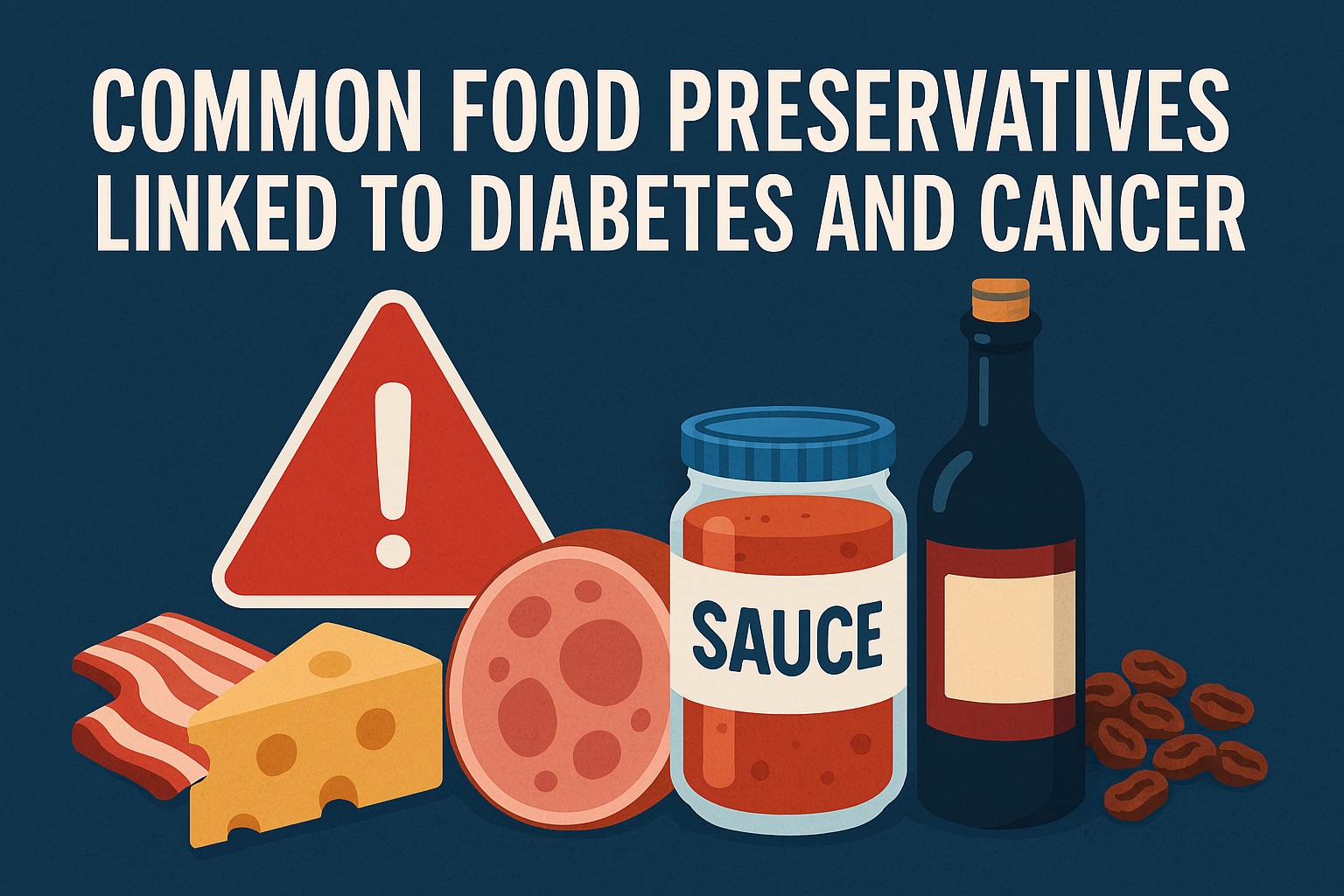
Food preservatives are everywhere. They help keep packaged foods fresh, prevent mold and bacteria, and extend shelf life. Without them, many grocery store staples wouldn’t last long enough to make it from factory to kitchen.
But growing research suggests that some commonly used food preservatives may be linked to higher risks of serious health conditions, including type 2 diabetes and certain cancers. While these studies do not prove cause and effect, they raise important questions about how much processed food we eat and what’s inside it.
Why Food Preservatives Are Under Scrutiny
Preservatives are added to foods to slow spoilage, prevent foodborne illness, and maintain color or texture. Many have been approved by food safety agencies and are considered safe in small amounts.
However, modern diets rely heavily on ultra-processed foods, meaning people may be consuming these additives daily and in combination. Researchers are now studying whether long-term, repeated exposure could contribute to chronic diseases over time.
Two large studies published in early 2026 – one in The BMJ and another in Nature Communications – examined the diets and health outcomes of more than 100,000 adults in France. The findings linked higher intake of certain preservatives with increased rates of cancer and type 2 diabetes.
Better Treatment, Lower Cost – No Catch.
Find safer, more effective medications with fewer side effects – often for less money. It’s fast, free, and personalized. Learn More →
Preservatives Linked to Higher Cancer Risk
The cancer-focused study followed participants for up to 14 years and analyzed their intake of dozens of food preservatives. While many showed no association with cancer, several stood out.
Preservatives Most Strongly Linked to Cancer
| Preservative | Common Uses | Associated Cancer Risk |
| Sodium nitrite | Bacon, ham, deli meats | Higher prostate cancer risk |
| Potassium nitrate | Processed meats | Higher breast and overall cancer risk |
| Potassium sorbate | Baked goods, cheese, wine | Higher breast and overall cancer risk |
| Potassium metabisulfite | Wine, beer, dried fruit | Higher breast and overall cancer risk |
| Acetates / acetic acid | Sauces, breads, cheeses | Higher breast and overall cancer risk |
Sodium nitrite showed one of the strongest associations, with about a 30% higher risk of prostate cancer among people with the highest intake compared to those with the lowest intake.
It’s important to note that processed meats themselves have already been classified as carcinogenic by the World Health Organization, meaning preservatives may be part of a broader risk pattern rather than the sole cause.
Stop Overpaying for Meds.
Coupons aren’t your only option – see if safer, more effective, and lower-cost alternatives are available. It’s fast, personalized, and 100% free. Learn More →
Preservatives Linked to Type 2 Diabetes
A separate study examined how preservative intake related to new cases of type 2 diabetes. Over the study period, more than 1,100 participants developed diabetes.
Preservatives Most Strongly Linked to Diabetes
| Preservative | Common Uses | Diabetes Risk |
| Potassium sorbate | Cheese, sauces, wine | Nearly double the risk |
| Nitrites (total) | Processed meats | Higher diabetes incidence |
| Sulfites | Wine, dried fruit | Higher diabetes incidence |
| Acetates | Processed foods | Higher diabetes incidence |
Potassium sorbate stood out, with researchers finding roughly twice the risk of developing type 2 diabetes among people with the highest intake compared to those with the lowest intake.
The study also found that about one-third of preservative exposure came from ultra-processed foods, reinforcing concerns about heavily packaged diets .
How to Interpret Data From These Studies
These findings come from observational studies, meaning researchers tracked people’s diets and health outcomes over time but did not control what participants ate.
That means:
- The studies show associations, not direct cause-and-effect.
- Other lifestyle factors – such as overall diet quality, alcohol intake, or physical activity – may also play a role.
- The increased risks were described as moderate, not extreme.
Experts involved in the research emphasize that eating foods with preservatives does not mean someone will automatically develop cancer or diabetes. Instead, the concern is cumulative exposure over many years .
Why Processed Foods Matter More Than Individual Additives
Preservatives rarely appear alone. They are typically found in foods that are:
- High in salt, sugar, or unhealthy fats
- Low in fiber and nutrients
- Easy to overconsume
This combination may contribute to inflammation, insulin resistance, and metabolic stress – factors already linked to diabetes and cancer.
Researchers suggest that preservatives may act as one piece of a larger puzzle rather than a single villain .
How to Reduce Exposure Without Overhauling Your Life
Avoiding preservatives entirely is unrealistic, but small changes can significantly reduce exposure.
Practical Steps That Help
- Choose fresh or frozen foods when possible
- Limit processed meats like bacon, sausages, and deli slices
- Read ingredient lists and watch for nitrites, nitrates, and sorbates
- Cook more meals at home using basic ingredients
- Treat ultra-processed foods as occasional, not daily, staples
Even modest shifts toward minimally processed foods can lower preservative intake and improve overall diet quality.
What Health Authorities Are Saying
Some governments are already responding. France has encouraged food manufacturers to reduce nitrite use in processed meats, and public health experts are calling for clearer labeling and further research.
In the United States, preservatives remain regulated by the FDA, but many experts argue that safety evaluations should consider long-term, real-world consumption patterns rather than isolated doses .
Key Takeaway
Food preservatives play an important role in food safety, but emerging research suggests that frequent, long-term exposure to certain preservatives may be linked to higher risks of cancer and type 2 diabetes.
The takeaway isn’t panic – it’s awareness. Choosing fewer ultra-processed foods and more whole, minimally processed options remains one of the most reliable ways to protect long-term health.
As research continues, these findings reinforce a message nutrition experts have shared for years: diets built around fresh, simple foods tend to support better health over time.
Experiencing Side Effects?
Let’s Rethink Your Meds.
Explore treatment options that may work better for your body – with fewer side effects and lower costs. It’s fast, free, and tailored to you. Learn More →
Sources (5)
- CNN – Some food preservatives linked to higher cancer, diabetes risk
https://www.cnn.com/2026/01/07/health/food-preservatives-cancer-diabetes-wellness - The BMJ – Intake of food additive preservatives and incidence of cancer
https://www.bmj.com/content/392/bmj-2025-084917 - Nature Communications – Associations between preservative food additives and type 2 diabetes incidence
https://www.nature.com/articles/s41467-025-67360-w - World Health Organization – Processed meat and cancer
https://www.who.int/news-room/fact-sheets/detail/cancer - ScienceAlert – Major studies link food preservatives to higher risk of cancer and diabetes
https://www.sciencealert.com/major-studies-link-food-preservatives-to-higher-risk-of-cancer-and-diabetes