




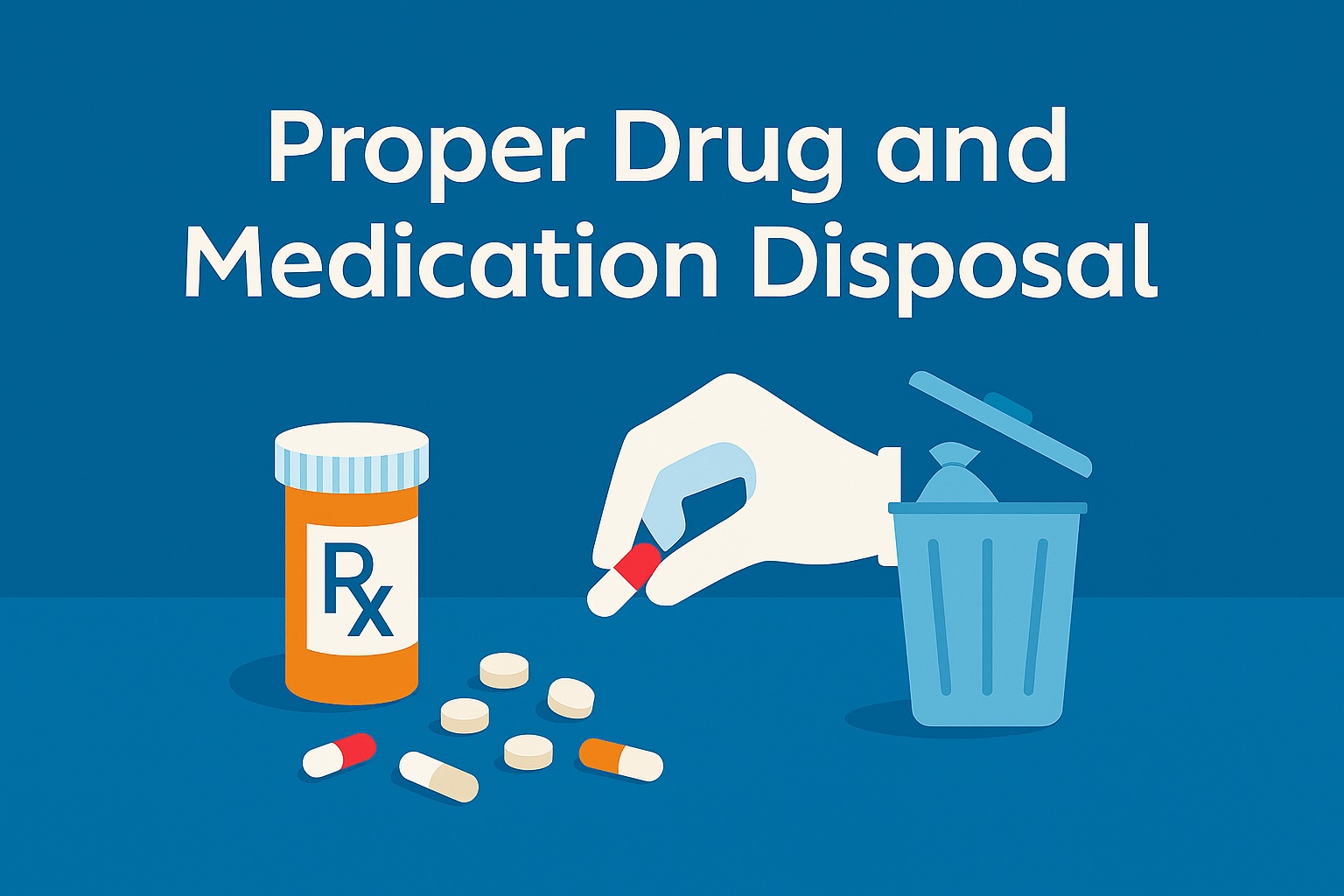
Improper disposal of unused and expired medicines is a hidden environmental and public-health crisis. Millions of households, clinics, and long-term care facilities discard pharmaceuticals in ways that allow active drug ingredients to enter landfills, septic systems, wastewater treatment plants, and surface waters. These pathways spread bioactive chemicals into ecosystems, contribute to antimicrobial resistance, and increase the risk of accidental poisonings and drug diversion.1
Why this matters at scale
- Rising medication use: Global pharmaceutical production and consumption continue to expand, increasing the amount of expired and unused drugs that need disposal.2
- Ubiquitous release pathways: Medications reach the environment via human excretion, flushing, landfill leachate, manufacturing effluent, and agricultural runoff.3
- Incomplete removal: Conventional wastewater treatment plants generally do not remove many active pharmaceutical ingredients (APIs), allowing residues to pass into rivers and coastal waters.4
Scope and human impacts
A meaningful share of prescribed and over-the-counter drugs ends up unused in homes. Unused medicines create direct public-safety risks: accidental pediatric poisonings, intentional misuse (opioid diversion), and improper self-medication. Take-back programs reduce these risks by redirecting medicines away from household trash and sewers.7
- Poisoning and diversion: Unsecured or discarded opioid and benzodiazepine medications are a documented contributor to misuse and overdose in communities.9
- Health-system burden: Managing pharmaceutical waste in healthcare facilities requires compliance with federal and state rules; mismanagement can lead to regulatory fines and public-health exposures.1
Cited studies show that improper household disposal combined with excreted drug residues mean that aquatic organisms, not humans directly, are first affected—but human risk emerges indirectly through antibiotic resistance and contaminated water resources.<sup>6</sup>
Impact on water systems and ecosystems
Pharmaceuticals in water are an “emerging contaminant” problem with evidence of ecological harm:
- Aquatic toxicity and behavior changes: Low-concentration APIs (e.g., NSAIDs, hormones, antidepressants) alter fish physiology, reproduction, and behavior; male fish have been observed with feminized characteristics downstream of pharmaceutical inputs.5
- Antibiotic resistance: Continuous environmental exposure to antibiotics promotes resistant bacteria that can transfer resistance genes to human pathogens, amplifying public-health threats.2
- Persistence and bioactivity: Many APIs are bioactive at low doses and some persist long enough to cause chronic exposures for aquatic organisms.6
A 1999–2009 USGS series detected pharmaceuticals in the majority of sampled streams, illustrating pervasive environmental presence tied to both human and manufacturing sources.6
Practical disposal methods that work
The best disposal approach balances safety, accessibility, and environmental protection. The hierarchy below reflects current federal guidance.
| Preferred option | How it works | Benefits |
| Drug take-back (in-person) | Drop off at participating pharmacies, clinics, or DEA take-back events | Safest; incineration or secure destruction; prevents diversion |
| Mail-back programs | Prepaid return envelopes provided by pharmacies or health programs | Convenient; controlled destruction |
| Authorized collectors (year-round) | Registered collectors accept medicines for safe destruction | Secure, ongoing option |
| Home trash (if no take-back) | Mix drugs with undesirable material, seal in container, discard; remove personal info from labels | Last resort; recommended only when no take-back available |
| Flush only if on FDA flush list | Immediate flushing of very high-risk opioids or fentanyl patches as directed | Prevents imminent harm but is limited to a short FDA list |
Quick checklist for households
- Use pharmacy or community take-back programs whenever possible.7
- Keep controlled substances (opioids, stimulants) securely stored until disposal; follow FDA flush guidance only for listed high-risk medicines.7
- If forced to trash, render the drug unusable (mix with coffee grounds or kitty litter), seal, and conceal personal information on empty containers.8
- Never pour liquids down drains or flush solids unless specifically directed by FDA guidance for that medication.7
Policy and infrastructure: where improvements are needed
- Expanded access to take-back: More year‑round collection sites and mail-back options would lower household reliance on trash and flushing.9
- Healthcare facility compliance: Facilities need clear, enforceable rules and practical collection pathways so that institutional stock is destroyed responsibly rather than flushed or dumped.1
- Advanced treatment technologies: Upgrading wastewater treatment to remove APIs can reduce ecological loading but requires substantial investment and targeted regulation.4
- Global equity: Low- and middle-income regions often lack take-back infrastructure and rely on landfill or informal disposal, making international policy and funding gaps a priority for global health.2
Simple numbers that illustrate the problem
- Over 4,000 prescription medicines are used in humans and animals; many of these are detected in environmental monitoring studies.6
- Studies detect one or more pharmaceuticals in the majority of sampled streams in multi-state surveys, confirming broad environmental dissemination.6
- Antibiotic-resistant infections cause millions of illnesses globally; environmental antibiotic inputs are one contributing driver.2
Call to action
- Households: locate your nearest pharmacy take-back or mail-back option and commit to using it for all unused medicines.
- Clinicians and health systems: prescribe more conservatively, promote unit-dose dispensing, and adopt secure on-site disposal or participation in take-back programs.
- Policy makers: fund community collection programs, require drug manufacturers to support take-back infrastructure, and incentivize wastewater upgrades to remove APIs.
Proper disposal of medications is a feasible, high-impact intervention that reduces poisoning and diversion risks today while protecting aquatic ecosystems and slowing the spread of antimicrobial resistance over time.
Better Treatment, Lower Cost – No Catch.
Find safer, more effective medications with fewer side effects – often for less money. It’s fast, free, and personalized. Learn More →
Sources (9)
- Daniels Health — Consequences of Improperly Disposed Pharmaceuticals
- Springer Nature – Environmental and Health Consequences of Pharmaceutical Disposal Methods: A Scoping Review 2025
- Secure A Drug — Consequences of Improper Pharmaceutical Disposal
- U.S. Environmental Protection Agency — The Impact of Pharmaceuticals Released to the Environment
- Harvard Health — Drugs in the water
- U.S. Geological Survey — Pharmaceuticals in Water
- U.S. Food and Drug Administration — Disposal of Unused Medicines: What You Should Know
- U.S. EPA PDF — How to Dispose of Medicines Properly
- DEA Diversion Control Division — Drug Disposal Information